Showing posts with label Women. Show all posts

Tuesday, November 4, 2025

Lex Anteinternet: Sunday, November 4, 1945. Goose Hunters on the Cover of Parade.

Lex Anteinternet: Sunday, November 4, 1945. Independent Smallholde...: The Independent Smallholders Party won the Hungarian parliamentary elections. Contrary to what is commonly assumed, Eastern Europe didn'...


The Sunday Parade magazine installment to newspapers across the country had a man and woman on the cover, goose hunting.  This cover, posted under the fair use exception, shows how widely hunting remained part of the culture before the post war relentless advance of urbanization cut into it.

The man is carrying a Browning Auto 5 or the Remington equivalent of it.    The device on the barrel of the shotgun on the right is a Cutts Compensator, which was designed to reduce recoil and in later versions allowed for changeable chokes.

Wednesday, January 8, 2025

Lex Anteinternet: Work with meaning and the meaning of work.

Lex Anteinternet: Work with meaning and the meaning of work.: 

Work with meaning and the meaning of work.

You see, in this world there's two kinds of people, my friend: Those with loaded guns and those who dig. You dig.

Blondie, The Good, the Bad and the Ugly.

I have a theory that certain work is existential by nature.  My post on that from several months ago:


Why do I note this?

Well I've had a bunch of synchronicitous events happen recently that perhaps demand it being noted, assuming that anything must be noted here at all.  Because they're all sort of circular, I'll start in one spot and gather the round corral, noting that these recollections are all recent, but not chronological.

I was walking out of the sporting goods store and ran into a law school colleague.  For some reason or another, for much of my life, I've always been the youngest person in a group as a rule, even when I really shouldn't have been.  Anyhow, this fellow, like two other of my law school friends, was an older law student, in law school, although I'm not sure how old he really was then,  Two of my other friends, both Vietnam War era veterans, were in their 40s, so they're in their mid 70s now.  I think this fellow was probably in his mid to late 30s.  He remained remarkably the same looking all that time.

He kind of bounced around at first as a lawyer before landing in a firm where he practiced for maybe 20 years.  He's retired now, and has been for awhile.  He asked me if I was getting ready to retire, which I indicated I wasn't, but I did ask him about the process, and he gave me some details of how he'd gone about it.  

Good to know from somebody who has done it.

He doesn't miss practicing at all.

In contrast to this, a close friend of mine, well really a relative, who is a lawyer who must be crowding 70 told me the other day he's not going to.  He'd miss the collegiality of being a lawyer.

That answer shocked me.  Not that he wasn't going to retire, but the collegiality.

Eh?

It may be just me, but only a handful of my friends are lawyers.  I do have some lawyer friends.  But most of my friends aren't lawyers and never have been.  I wouldn't miss most lawyers whatsoever.  Indeed, I miss a lot of my genuinely close friends due to the practice of law.

This, frankly, is probably an exception to the rule.  Law is a unique profession, litigation with in the law even more so, and by and large the onliy people who have a grasp on what it is like are other lawyers.  It is, I suppose, kind of like being a combat veteran that way.  Lawyers hang out with other lawyers as they're lawyers.  

Indeed, being heavily introverted, I've often noted how much lawyers enjoy professional gatherings. They really do.  There are organizations that we're all part of and we'll go to a conference and there will be a big dinner or something, everyone goes.

Unless my spouse is with me, or one of the few lawyers I really know well and like, I tend to avoid those gatherings.

Anyhow this takes me to a second point.

I know a couple of lawyers who have lost their souls.

I don't mean in a metaphysical sense.  That is, I'm not saying they're condemned to Hell.  What I'm saying is that their personalities are gone and been absorbed by false ones in the pursuit of nothing more than money.

It happens to people.  It's not a pleasant thing to see.  

I was never friends with either of the ones I have in mind.  Interestingly, however, one seems to be trying to emerge.  One, who sank into this a long time ago actually started talking to me the other day about what he was going to do "next", something he's never said before.

A really good lawyer friend of mine is mostly retired.  Like the fellow I mentioned above, while he had his doubts, he hasn't missed the practice at all.

Another good lawyer friend of mine, a woman, is trying to transition from one practice to another.

Two women I know otherwise recently lost their jobs. They weren't lawyers.

I note that as I think women in particular are subject to the Capitalist lie that careers are existentially defining, a completely modern notion.

St Paul was a tent maker.  St. Peter a fisherman.  I don't know if there are any classic Medieval or Renaissance paintings of St. Paul making a tent, but there should be.

Why do I note that?

Well, for this reason.  You don't think much about St. Paul being a tent maker as his occupation didn't define him.  His sainthood did.  

But a lot of us moderns sure have made our occupations define us.  And women are very much doing so now.

This takes me back to the item I linked in above.

In this case, unlike my uncle, he was much younger.  My age, in fact.  I hadn't seen him for many years, and before his troubles really set in.  He hadn't been able to adjust to them well.  The most common comment from people, none of whom were surprised, was that his torment was over.

I don't have any big plans, like one of my friends, for retirement.  I hope to be healthy, and just become more of an agrarian-killetarian than I presently am.  Funny thing is that recently I've been running into people who claim "you're looking really good". Somebody asked me the other day, indeed at the funeral gathering, "you're working out", the question in the form of a statement.  Not really.

Indeed, I've gained some weight I seemingly just can't lose, which I think is the byproduct of my thyroid medicine, which has made me hungry, and I know that I'm not in the physical condition I was before my recent health troubles commenced.  People close to me just won't accept that, which brings me to the other side of the retirement coin noted above.  Some lawyers I know are already planning for me to work into my 70s, as that's the thing to do, apparently. Long-suffering spouse, for her part, won't say something like that, but from an ag family, she doesn't really accept the concept of retirement anyhow.  Having said that, I wouldn't plan on my retiring from the ag operation either.

It finally occured to me, however, what's different about agricultural jobs as opposed to others, at least if you are an owner of the enterprise or part of it.  The occupation itself is existentially human.  It is, if you will, an Existential Occupation, or at least it is right now. The mindless gerbil like advance of "progress" may ruin that and reduce it to just another occupation.

Existential Occupations are ones that run with our DNA as a species.  Being a farmer/herdsman is almost as deep in us as being a hunter or fisherman, and it stems from the same root in our being.  It's that reason, really, that people who no longer have to go to the field and stream for protein, still do, and it's the reason that people who can buy frozen Brussels sprouts at Riddleys' still grown them on their lots.  And its the reason that people who have never been around livestock will feel, after they get a small lot, that they need a cow, a goat, or chickens.  It's in us.  That's why people don't retire from real agriculture.

It's not the only occupation of that type, we might note.  Clerics are in that category.  Storytellers and Historians are as well.  We've worshiped the Devine since our onset as a species, and we've told stories and kept our history as story the entire time.  They're all existential in nature.  Those who build certain things probably fit into that category as well, as we've always done that.  The fact that people tinker with machinery as a hobby would suggest that it's like that as well.

Indeed, if it's an occupation. . . and also a hobby, that's a good clue that its an Existential Occupation.

If I were to retire from my career, which I can't right now, I wouldn't be one of those people who spend their time traveling to Rome or Paris or wherever.  I have very low interest in doing that.  I'd spend my time writing, fishing, hunting, gardening (and livestock tending).  That probably sounds pretty dull to most people.  I could imagine myself checking our Iceland or Ireland, or fjords in Norway, but I likely never will.

That's more than I really need for my point here, but it ties in, this way.

Most careers are just jobs. They're an industrial way of separating you from your homes to make money for somebody else, in exchange for which you make some money too.  This was done to men first, and then with the "women's liberation" movement of the 1960s, women drank the KookAide and have been wondering when the good feels will arrive.

They won't.

Most jobs have no greater existential meaning than that.  If you define yourself by them, you are defining yourself as a fiction.

Which is why I worry about the lawyers who collapse into the cartoonish litigation personality.  It makes you a cartoon, and not a very interesting one.

It's also why lawyers who become deep dive into the Whaling For Justice personality, or something like it, sort of boil off the people they were and become somebody nobody is interested in.

And I also think that's why old lawyers have a hard time retiring.  After selling your life away, is this it?  It must be. This must be it.  I must love this as otherwise. . . .

I will note, and strongly, that I'm not advocating here for something that seems to be a current rage.  Don't get any post high school education and hope for the best.

Indeed, the advocates of that, don't mean that.  They mean don't forget to look at occupations where you work with your hands.
Now listen to me, all of you. You are all condemned men. We keep you alive to serve this ship. So row well, and live.

Quintus Arrius, Ben Hur.

The truth of the matter is that we sell our lives for a living, but we shouldn't sell our souls.  A lot of career propaganda emphasis the nifty life you are supposed to have, but not the risk of losing your soul, and here I mean in both senses.  Being able to sell the minutes of your life away for a decent return means that you need to have skills of some sort that are valuable.  People should try to acquire those if for nothing else their own protection.

Women, I'd note, are particularly vulnerable here.  A woman with a professional degree, such as law, is armed against loss of employer.  A woman who doesn't have some sort of valuable skill is at the mercy of her employer.  They're the ones who lose their jobs readily, and who are subject to all sorts of risks.  

The trick, I guess, is to get those skills and remember that we shouldn't lose who we are.

One group of people who tend to make that career choice are people who work for the government. They're often grossly underpaid, but they also tend to have weighted the options and elected towards "quality of life".  Lawyers who work for the AG's office, or biologists who work for state and Federal agencies provide such examples.  

Interestingly, people on the outside in the same fields tend to hold these people in contempt.  I guess people working 80 hours a week to make a go of it are naturally resentful towards those who do not.  But those people are often very dedicated to their professions and even more purist than those who sell their labor in the private market.  A dear cousin of mine who recently died was one such example.  She was a research biologist at a university.  

We're about to head into a Federal administration here that seems to contain a contempt to government employees.  Indeed one recent campaign featured somebody who wants to limit the amount of time you can work for the Federal government.  The same campaign repeatedly noted the candidates rural roots.

The rural roots are real, but what an irony.  Descending from homesteaders means that you descent from the biggest American welfare program ever, one that used the U.S. Army to violently expel land occupants due to their race, to hand it out to European Americans.  Don't mistake my point, I love agriculture and regard it as an existential occupation, and if I'd been alive when you could have homesteaded, I would have.  But people who loved the land so much they fought for it, and lost, had the moral high ground on that, and those who came in behind them benefitted from the Federal largess and murder.
If you work for a living, why do you kill yourself working?
Tuco, The Good, the Bad and the Ugly.

Genesis tells us that since we sinned in the Garden, we've condemned ourselves to work.  But it's also obvious that work was always part of the plan.  It's interesting how well this comports to how evolution and societal development worked.  We were likely a very happy group as aboriginals, and we know now that depression and modern angst is unknown in hunter gatherer societies.  But we ate from the tree of knowledge and acquired it, 

Well, now we have to work.  Make the best of it.

Sunday, June 2, 2024

Lex Anteinternet: Boy Scouts no more.

Lex Anteinternet: Boy Scouts no more.:   

Boy Scouts no more.


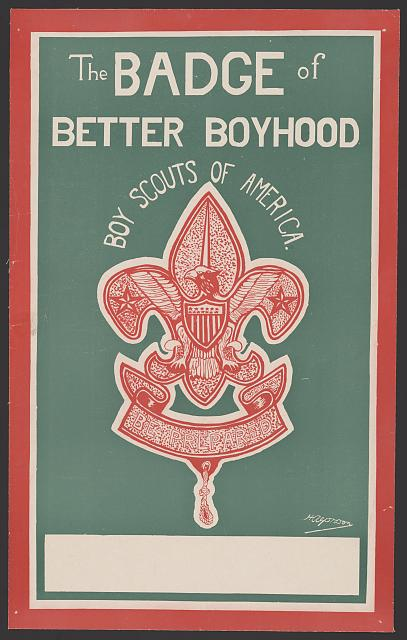
The Boy Scouts of America is changing its name to Scouting America

Boy Scouts of America has announced it will rebrand as Scouting America, which, if media impressions are any measure, is a very big deal. Within days of the announcement, the collective online impressions of the news surpassed 14 million, according to the organization — a staggering figure that underscores the institution’s widespread influence.

Article in the Tribune. 

Does it really suggest the "institution's widespread influence", or its tragic decline from what had been that influence?

I teed this up quite a while back and since that time the Southern Rockies Nature Blog, which is linked in here, has a really nice and personal blog entries on this item, entitled Bye Bye Boy Scouts.  I can't really say goodbye to the Scouts that way, as I never was much of a Scout.

Usually I say I was never a Boy Scout, but that's not true.  I was briefly.  Probably around when I was in 6th Grade, or at whatever point it is when a person goes from Cub Scout to Boy Scout, when there were Boy Scouts.  I didn't really last long in it, and it's hard to say exactly why.  Part of it was, I think, as they group I was in, while they did do things, was slow to get around to doing them.  The several merit badges I earned while I was in, I just picked out and did by myself.  That "by myself" thing probably had a lot to do with it also, as by this time my lifelong introvert nature was firmly set in, and unless compelled by external forces or acclimated by long exposure to a group, you'll feel uncomfortable in a group.  Usually I say that I'm "not much of a joiner", with this being, I think, part of it.

Another part may simply be that I'm highly rural and was then.


We don't tend to think of it this way, but Scouting was an urban movement.1   Aware of the inadequacy of young British men in the Boer War, Lord Baden-Powell, who after the war became the British Army's Chief of Cavalry, founded the Boy Scouts.  The idea was twofold, those being 1) British boys had become a bunch of anemic unskilled wimps who needed some manning up from nature, and 2) British boys had become a bunch of anemic unskilled reprobates who needed some Muscular Christianity.

The original organization had no place for girls.  Girls wanted to participate in things, and soon had their own organizations.  The two didn't mix.

And frankly it didn't mix for good reason There are such things as manly, and womanly virtues.  Much of what the original Boy Scouts sought to address was spot on in its observations, and Scouting did a really good job of addressing them.  Often affiliated with churches, Scouting groups were successful in teaching boys a lot of valuable outdoor skills that often stuck with them for life, and they were benefitted in that goal by the absence of girls, who at a bare minimum are extremely distracting to boys and young men.  Given their natures, young women are usually, although not always, much less distracted by young men.

There's been a lot written on the decline of the Boy Scouts, and there are various theories about it.  One of the blogs linked in here, The Southern Rockies Nature Blog, has an article about it that's worth checking out.  Whatever it was that brought it to its current state, it was still a pretty strong organization in the 1970s, when I had my brief association with it. At that time, even in the rural West, a lot of boys were part of it, and for that matter quite a few of their fathers had a strong association with it.  Being in the Boy Scouts (which my father never was), was part of a multi generational thing.

Signs of decline were there even then.  Of my good friends, only one was a Boy Scout, which his father had been.  Another had a father who had a strong history of Scouting, but my friend wasn't in it.  I was in a youth organization in my early teens, but it was the Civil Air Patrol, which with its martial aviation theme was a completely different type of organization.  Rural kids, of whom I knew a lot, tended to be in the FFA, which had direct practical application to them.
I wish I could pinpoint what was going on, but I really can't.  I've tried to do so here before, and probably haven't been successful.  Looking at the topics addressed in this thread, however, I think part of it may have been that in the post World War Two era that went into the 1970s, the retained gaze upon the rural really faded.  Even television reflected that as programming went from the rural focused on the 1960s, such as The Andy Griffith Show, The Beverley Hillbillies, and Green Acres, the last two of which anticipated the change, to urban centric dramas such as Newhart, The Mary Tyler Moore Show, WKRP In Cincinnati, etc.  Americans had been moving into the cities for a long time, but suddenly they quit looking outside of them.  Even a gritty urban environment depicted in something like The French Connection was celebrated in a way.  It's notable that a figure like Clint Eastwood, who had come up in westerns, started appearing as Dirty Harry in urban California at the same time, and Dirty Harry, like Popeye Doyle, wasn't portrayed as any sort of Boy Scout.

The atmosphere of the late 60s also brought in destructive forces that we're still dealing with.  The resolute male admired and celebrated from the era of The Strenuous Life on to the Ballad of the Green Berets suddenly, in the Strauss Howe fashion, yielded to the feminized and marginalized male, at least in the dominant WASP culture.  It's never really recovered, and we can see some of the reactions to that playing out in society now.


In that atmosphere, Scouting attempted to adapt, but that's part of the problem.  The campaign hat went out, and the red beret came in.2 Out with the old, and in with the new.  The institution already had, however, its close association with Christianity and a sort of "goody two shoes" reputation.  It probably should have just doubled down on that and its rural focus, but it tried to adapt instead.

Like other institutions that were heavily male and which had become somewhat soft, it also began to be plagued, apparenlty, with male on male sexual conduct.

People hate to discuss this part, so the realities of this should be noted.  One of the byproducts of keeping boys and girls separate in Scouting is that it not only allowed boys to focus, but it kept boys and girls out of close proximity to each other. Scouting involves teenagers.  No matter how focused or watched, when male and female teenagers are together, some of them will misbehave in ways that create life changing byproducts.  A person only has to look at the expansion of the role of women in the military in order to appreciate this.3 

We already know that the largest group of abusers of teenagers in this fashion are teachers.  The decline in personal morality brought about by the Sexual Revolution helped unleash this, and I'd wager that a person could easily find a story of a teacher engaging in this conduct with a teenaged charge nearly every month.  I ran across one just last week, in which the assailant was a female teacher and the victim something like a mere 13 years old.  If this happens in an institution in which being discovered will result in the end of a career and jail time, and in which getting caught is highly likely, it's going to happen in situations in which this is much less discoverable.

Put bluntly, as the Muscular Christianity focus waned, the Sexual Revolution came on, and an overall feminization of society advanced, predatory homosexuality in the Boy Scouts became inevitable to some degree, and it had probably always been there at least to some extent.  It's customary at this point to note that not all homosexuals are predatory, and that only a minority are, which is absolutely true, but it happened.  That some people would let their behavior go in an all male setting shouldn't be any more surprising than those instances of male coaches preying on young teenage female athletes.  It's reprehensible, but without additional external controls, it was going to occur.

This helped cause Scouting's popularity to drop off massively, and not surprisingly. Parents quit encouraging their children to be Scouts.  Not really knowing what to do about it in the context of the culture, Scouting opened its doors to girls. This predictably hasn't helped, and it won't.  Scouting will, I'd guess, be largely taken over by girls, but it won't be an organization that Boy Scouts prior to the 1970s would recognize.

There's something to all male bonds between conventionally oriented males that is unalterably different from ones with women.  Probably our biology has a lot to do with it.  The mateship that exists in military units, for example, which are all male, is completely different from an organization that has even one female in it.

The larger tragedy is that the very thing that Scouting was created to address in the first place, in large measure, is probably need as much now as it was then.  The source of the problem is large the same, the urbanization of the country and the corrupting influence of urban life, combined with the absence of male roles, something that existed in the very early 20th Century and something that exists now, albeit for different reasons.  Scouting, by having gone first soft, and then semi feminized, is no longer the organization that it was, that addressed that.


Footnotes:

1. Recently I read Doug Crowe's book A Growing Season, which is extremely off color, but extremely interesting.  The back of the book, where the short review is, terms it a novel, but it isn't.  The figures in it are all real, I either know of them or actually knew some of them.

It occured to me in posting this that part of the reason that the Boy Scouts lost its appeal to me here is that in a highly rural setting the first purpose of scouting, to introduce the outdoors, will be taken up by those who have a strong affinity towards it, which most young men do, all on their own.  Going to Scouting events actually retards a person's ability to go outdoors and do what you want, with your young male associates, once somebody is of driving age, or at least it did then. As soon as somebody was 16, we were pretty much loose in the world.

As noted, not surprisingly, our companions in these forays were all male.  I can't recall going on an outdoor adventure of any kind with a female of my own age until I was at the University of Wyoming.  Nature segregates us in that fashion, even if society doesn't want us to.  As A Growing Season demonstrates, that certainly gives rise to opportunities to engage in vice, although did not in any serious fashion, and the few of my fellows who really fell into it did so, notably, in town.

2.  Only if troops adopted it, however.

3.  Without putting too fine a point on it, two women I know of who were justifiably very proud of their military service, and neither of which might be regarded as libertine, had early discharges from the service for this very reason, followed by the birth of their oldest child not long after.  The service with the biggest problem, seemingly, is the Navy, where close proxmity on ships has caused an alaraming pregnancy rate in some instances.

Related threads:

Youth organizations. Their Rise and (near) Fall, or is that a myth? And, did you join?


Blog Mirror: What Scouting Has Lost

Friday, April 14, 2023

Lex Anteinternet: Lex Anteinternet: What's wrong with the (modern, w...

Lex Anteinternet: Lex Anteinternet: What's wrong with the (modern, w...: 

Lex Anteinternet: What's wrong with the (modern, western) world, part 3. Our lost connection with animals.

ICELANDIC MILKMAID ON HER MORNING ROUND

This is a fine, sturdy pony standing so stockily for his photograph, and he can make light of his burden of buxom beauty with her heavy can of milk. She cares not for saddle or stirrups, for most of these island people are born to horseback, and her everyday costume amply serves the purpose of a riding-habit for this strapping Viking's daughter, with her long tresses shining in the breeze.  

(Original caption, of interest here I wouldn't call this young lady "buxom" or "strapping", but just healthy.  This might say something about how standards have changed over time.)

The other day, I posted this in a footnote on a completely different topic.

Lex Anteinternet: What's wrong with the (modern, western) world, par...:   
4.  One of the odder examples of this, very widespread, is the change in our relationship with animals.

Our species is one of those which has a symbiotic relationship with other ones.  We like to think that this is unique to us, but it isn't.  Many other examples of exist of birds, mammals and even fish that live in very close relationships with other species.  When this occurred with us, we do not know, but we do know that its ancient.  Dogs and modern wolves both evolved from a preexisting wolf species starting some 25,000 to 40,000 years ago, according to the best evidence we currently have. That likely means it was longer ago than that.


Cats, in contrast, self domesticated some 7,000 or so years ago, according to our best estimates.

Cat eating a shellfish, depiction from an Egyptian tomb.

We have a proclivity for both domesticating animals, and accepting self domestication of animals, the truth being that such events are likely part and parcel of each other. Dogs descend from some opportunistic wolves that started hanging around us as we killed things they liked to eat.  Cats from wildcats that came on as we're dirty.  Both evolved thereafter in ways we like, becoming companions as well as servants.  But not just them, horses, pigs, sheep, cattle. . .the list is long.

As we've moved from the natural to the unnatural, we've forgotten that all domestic animals, no matter how cute and cuddly they are, are animals and were originally our servants. And as real children have become less common in WASP culture, the natural instinct to have an infant to take care of, or even adore, has transferred itself upon these unwilling subjects, making them "fur babies".

It's interesting in this context to watch the difference between people who really work with animals, and those who do not.  Just recently, for example, our four-year-old nephew stayed the night due to the snow, and was baffled why our hunting dog, who is a type of working dog but very much a companion, stayed the night indoors.  The ranch dogs do not. . . ever.  The ranch cats, friendly though they are, don't either.
I started this thread back in February, when the entire news on "transgenderism" really hit the fan, so to speak.  Since that time there's been the filing of the sorority lawsuit in Laramie, a host of transgender mass shooting, and an absolutely freakish campaign by Budweiser in which a guy trying to channel a girl of the 1960s is sponsoring Bud Light.  Anyhow, this thread was to tie into it somehow, but now a lot of time has gone by, and working seven days out of seven, etc., I've really forgotten what my brilliant point here was to be, more or less.

But I'll go on anyhow.

This photograph shows a young woman at work, doing something that counted, and doing it in a way that was very close to nature.

So does this one:

Mid Week At Work: Mail Carrier, 1915, Los Angeles

And also this one:

And this one:

The point here?

Well this.  

We've gotten to the point where we don't deal with animals as they really are, daily.  We also are at the point where a large percentage of the original WASP demographic of the nation (more on this shortly) has lost most of the values it originally had, and replaced them with very weak tea instead.  And we've so removed ourselves from a state of nature, that most people don't have a grasp on what nature really is.

It's hard not to know the reality of the world if you live in it.

This past week, the Wyoming Supreme Court heard oral arguments in a case in Casper in which the plaintiffs claim they suffered emotional distress as their two pet dogs were caught in snares which they claim were improperly placed on public lands by a trapper.  Apparently, in a companion criminal case, the trapper was exonerated.  The state land is very close to the city, which is a problem, but it's still state land, and still unincorporated.

Losing dogs is a tragedy, but emotional distress?  This has never been allowed in the common law, as the law always held that the law is, basically, for people.  If you can claim emotional distress due to the loss of a pet, why not anything?

Now, that sounds cruel, and I understand grieving over the loss of an animal.  I've done it myself.  That is, in fact, one of the things about owning pets.  Normally, you outlive them, and if you are normal, you'll miss them when they die.

It's a part of life.

But emotional distress has been reserved, in the common law, for the loss of humans, based, in the end, for what we feel with the loss of a loved human being.  Not an animal, no matter how loved.

And of course, up until recently, there was no such concept as a legally recognized animal for "emotional support".  Support they did provide, but the bond was in a naturalistic way, not one for which the law afforded protection.

Have we lost something here?

I think we have, and it's connected with real work and real animals.

We'll explore What's Wrong With The World more in this series of threads, but here's one.  Being connected with animals in a real sense, and not in the sanitary removed from nature sense, helped keep us real.  

We've lost that.

It's hard to be obsessively focused on yourself, including your reproductive self, if you're around animals as animals, particularly great big ones that can hurt you.

And I'll bet the thought "I'm a girl, but I want to be a boy" didn't much cross the minds of Icelandic pony riding milkmaids, Oklahoman girl cowpunchers, or Los Angeles mounted mail carriers.

Related Threads:


Saturday, November 12, 2022

Lex Anteinternet: Evolutionary Biology and Resources. Mysteries tha...

Lex Anteinternet: Evolutionary Biology and Resources. Mysteries tha...: 

Evolutionary Biology and Resources. Mysteries that aren't.


The famous journal, The New Yorker notes:

During the coronavirus pandemic, pediatric endocrinologists saw a new surge of referrals for girls with early puberty—the number of these referrals doubled or even tripled during the lockdown periods of 2020, recent studies show.

So their conclusion?

Well, I don't know, as I couldn't get past the paywall.  I think I know the answer, and I'll get to that in a moment.

Mostly I'm posting this, however, due to the stupid anti-scientific comments that followed the Twitter article.  

Witness:

Nov 7

Replying to @NewYorker

Wonder how many were vaccinated- i think that's an honest and fair question no one is willing to ask

Mark Yerger@yerger224

Replying to @HoltonMusicMan and @NewYorker

its fair to ask anything.  it is a fact that this all occurred during the Trump presidency! its fair to ask what his administrations involvement was in all this.  yet he continues to evade this issue. I havent seen any denials or documents showing me otherwise.

Well played Yerger.

The same dipshittery appears in this comment:

BiancaD 🇺🇦🌻🤪❣🐷@rigbydan

Nov 8

Replying to @NewYorker

How many were vaccinated, since it was now confirmed that those of us who said the vaccine affected our cycles were proven correct?

Janice's Magic Wand@leighleighmw

Nov 8 

Replying to @rigbydan and @NewYorker

There was no vaccine available to children under 12 in 2020.

Again, good, if obvious, comment there to the apparent memory impaired and scientifically bereft BiancaD.

And:

Nov 8

Replying to @NewYorker

One reason is the hormones in the milk. I always bought organic milk and my daughter did not have early puberty like some of her friends.

Lone Stranger@LoneStr06411351

Nov 9

Replying to @Persona49820853 and @NewYorker

You got taken for a ride, then. Pediatric associations have firmly established the actual reason in the vast majority of situations is abundant nutrition. Puberty is delayed in environments of food scarcity. Which predominated much of human history until the last 100 years.

And that is exactly it.

In reality, the onset of puberty ages for girls isn't getting depressed due to hormones in your GMO cheese or mystery chemicals in your Blue Bunny, it's because human beings, or at least girls (one poster raises the good point that these stories seem to omit boys) are genetically programmed for lower onset of puberty ages in times of:1) high nutrition and 2) low physical output.

What were people doing during the pandemic?

I submit to you, they were sitting at home, eating.

In a state of nature, if girls are sitting around eating, their genes think "wow, we're in a super abundant period right now. . . move her up on the reproduction scale".

Now, I'm not claiming that's a good thing, but I am claiming that it's obviously the opposite of this?

Nov 8

Replying to @NewYorker

Does that indicate our future ability to reproduce is questionable?

Lone Stranger @LoneStr06411351

Lone Stranger, did you skip biology class?  Girls going to puberty earlier has the polar opposite effect.

Sheesh.

And that's why it's not a good thing.

What this is really evidence of is; 1) too much food, much of which is high calorie bad food, and 2) too little exercise.

Feed girls real food and get them involved in physical activity, the onset age will go up.

Better yet, get them out hunting and fishing, and learning how to produce their own food, and the onset age will go up, their health will improve, and the few who will be taken advantage of will decline in number.

Or, as noted:

Depends. In mammals at least the drift is to delay reproductive capability in times of stress or famine, so as to limit the population numbers straining already critical shortages.

When nutrition is abundant & ubiquitous is when sexual maturity manifests earlier.

Rage quitting this timeline@kesskessler401