Showing posts with label Animals. Show all posts

Saturday, August 23, 2025

Lex Anteinternet:  I didn't even have him for a year before the acci...:  I didn't even have him for a year before the accident took him.


 I didn't even have him for a year before the accident took him.

Tuesday, June 10, 2025

Southern Rockies Nature Blog: When Your Dog Sends You a Message

Southern Rockies Nature Blog: When Your Dog Sends You a Message: L ate in May (a month when I did not blogging, sorry, but I had reasons), my wife and I made a short trip to Taos, New Mexico, to decompress...

Monday, January 27, 2025

Lex Anteinternet: Tuesday, January 27, 1925. The 1925 Serum Run.

Lex Anteinternet: Tuesday, January 27, 1925. The 1925 Serum Run.

Tuesday, January 27, 1925. The 1925 Serum Run.

Two mushers and 150 dogs began the relay transportation of diphtheria antitoxin to the remote town of Nome, Alaska

Gunnar Kaasen with his lead dog Balto.

The event became the basis of the Iditarod sled dog race.

Leonhard Seppala with his dogs, lead dog, Togo, on the far left.  Togo was the lead dog in the most dangerous portions of the trial.

The run saved numerous lives.  The total number of people who died in the diphtheria outbreak is unknown.

The January Junta was established in Chile to restore Arturo Alessandrio to power.

Friday, September 6, 2024

Anthrax detected in a moose near Elk Mountain


Headquarter news

Sept. 4, 2024  

Anthrax detected in a moose near Elk Mountain


CHEYENNE — On Sept. 3, the Wyoming Game and Fish Department, through the Wyoming State Veterinary Laboratory, confirmed a case of anthrax in a dead moose in Carbon County. The Wyoming Livestock Board recently informed Game and Fish that cattle near Elk Mountain have tested positive for anthrax.


Anthrax is a naturally occurring bacterial disease that can be transmitted between livestock, wildlife and humans. It is most commonly seen in herbivores, including cattle, deer and bison (elk, moose and pronghorn are also susceptible). Carnivores tend to be less at risk and may display higher resilience to the disease. The spores can persist in the ground for decades and emerge when the ground is disturbed or flooded. Disturbance is common in summer months when conditions may alternate between rain and hot, dry weather, allowing spores to be released from contaminated soil and ingested by livestock or wildlife.  


This recent detection in a moose is the only documented case reported in wildlife at this time. The last confirmed case of anthrax in wildlife in Wyoming was in 1956 in Sublette County. 


Game and Fish is advising hunters and the public to take the following precautions:

  1. If you encounter dead cattle or wildlife, do not approach, handle or move carcasses.
  2. Do not harvest an animal that looks sick. Early signs of anthrax can include respiratory difficulty and disorientation. After death, infected animals tend to bloat very quickly and you may see black, tarry blood coming out of natural body openings (e.g., nose, mouth, anus).
  3. It is always recommended to wear gloves while field dressing or handling harvested animals.
  4. Do not pick up roadkill or fresh deadheads in the Elk Mountain area.
  5. Keep dogs, horses and other pets away from animal carcasses you come across in the field.
  6. If hunters encounter deceased wildlife, note the location or take a GPS pin and report findings to Game and Fish. You can report a wildlife disease incident online or by calling the Game and Fish Wildlife Health Laboratory at 307-745-5865.
  7. Human cases are rare but precautions are warranted. If you have concerns that you may have come into contact with an anthrax-infected animal, please contact the Wyoming Department of Health and seek medical attention.

Game and Fish will continue to monitor the situation and assess impacts to wildlife. If changes occur that require further action, hunters will receive updates through emails and posts on the Game and Fish website. 


For questions, please consult the following list of resources:


Agency

Topics Covered

Contact Information

Wyoming Livestock Board

Occurrences in cattle and area affected

307-777-7515

Website

Wyoming Department of Health

Human health and safety concerns

307-777-7656

Website

Wyoming Game and Fish Department

Wildlife and hunting concerns

Wildlife Health Lab: 307-745-5865

Regional Office: 307-745-4046


— WGFD —


footer_2017-Conserving Wildlife Serving People


The Wyoming Game and Fish Department manages and conserves more than 800 species of fish and wildlife across Wyoming.  For nearly 120 years, we’ve carried out our mission to conserve wildlife and serve people. Through these efforts, the Wyoming Game and Fish Department ensures the public continues to enjoy Wyoming’s vast fish and wildlife resource  through  hunting, fishing, trapping, wildlife watching and other forms of outdoor recreation. Hunters, anglers and wildlife watchers contribute over a billion dollars to Wyoming’s economy each year.


Tuesday, August 6, 2024

Too many bears.

An explosion in the bear population accompanied by bear attacks has caused Romania to reinstate a bear hunting season.

Wednesday, June 26, 2024

Report dead wild rabbits to Game and Fish
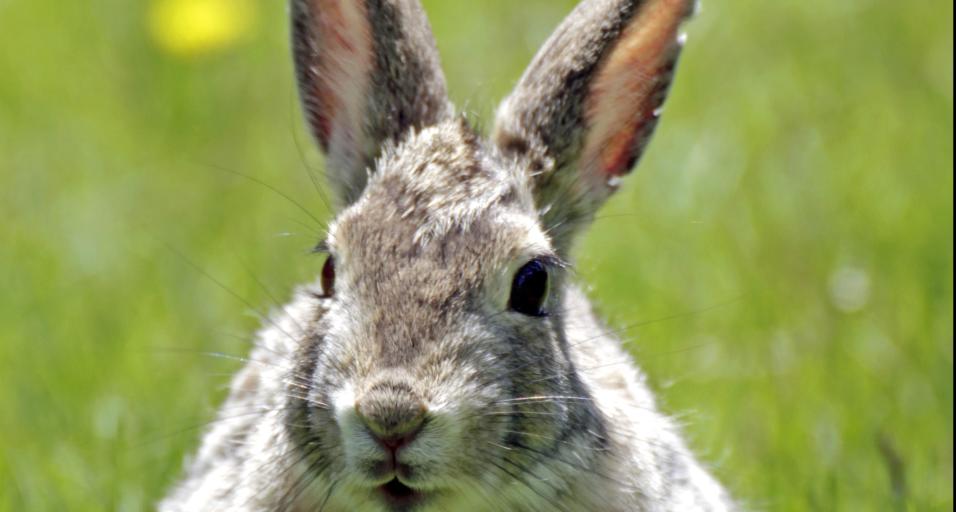
 Report dead wild rabbits to Game and Fish

Wyomingites are being asked to keep a lookout for dead rabbits in their yards, rural property and other outdoor areas. The Wyoming Game and Fish Department is collecting wild rabbit carcasses for Rabbit Hemorrhagic Disease Virus2 testing, known as RHDV2. While not found in Wyoming yet, the disease has been identified in neighboring states. Testing rabbits is key to monitoring the disease spread.

RHDV2 is a fatal disease of rabbits and hares. An estimated 35-50% of infected wild rabbits succumb to the disease.  

Samantha Allen, Game and Fish state wildlife veterinarian, said all of Wyoming’s rabbits and hares are susceptible — that includes game and nongame species like cottontail rabbits, jack rabbits and potentially, pygmy rabbits. Domestic rabbits are also at risk; however, other domestic pets and livestock are not at risk from the disease.

The first indication of RHDV2 infection in rabbits is dead animals.

“Any rabbit could become infected with the disease - so it could be a cottontail living in your yard or the one you see while hiking,” said Allen. “Please report any dead rabbits you find. Testing these carcasses is the only way to know if the disease is in Wyoming.”

The disease has been confirmed in California, Nevada, Texas, New Mexico, Arizona, Utah and Colorado. 

RHDV2 does not pose a threat to humans, but rabbits carry other diseases which can —  like tularemia and plague. The public is advised not to touch or pick up any dead wild rabbits. Rather, note the location and call the Game and Fish Wildlife Health Lab at (307) 745-5865 or the nearest regional office. Game and Fish personnel will evaluate the situation, and make plans to collect the rabbit.

Saturday, June 15, 2024

Bear

"Bear" is one of the oldest words in the Proto Indo European language group.  It's one of the hand full of words that comes down to us through the ages.

There's a reason for that.

Bears are dangerous.

Here's a recent headline:

Woman mauled by bear after her dog chased cub up a tree

Attack was in a Vermont condo complex near Stratton Mountain. Bears were also dining on pumpkins in the area.

Most of these articles go on to explain that black bear attacks, which is what the bear in question was, are "rare".

And they are.

Grizzly bear attacks, FWIW, are not.  We have a few in the state every year.  There's been at least three this year.

But attack a black bear will, and while rare, they do occur.

Sunday, May 12, 2024

Lex Anteinternet: The dog.

Lex Anteinternet: The dog.:  

The dog.


I've noted here before that I'm not really a "dog person", which is not to say that I don't like dogs.  I do.

I didn't have a dog growing up, save for an extremely brief time in which my parents for some reason adopted one from the Humane Society.  It was a Scotch Terrier mix and was fully grown, and ran away almost as soon as we got it.  I don't know what motivated them to acquire the do, I probably wanted one, and I can barely remember it, we had it so briefly.  I was very young at the time.

They probably chose the dog type as our yard was tiny.  When I was growing up, my mother wanted a bigger house for many years until she became attached to the one they'd bought in 1958, when they were first married.  The backyard really was tiny.  It wouldn't have accommodated a large dog.

We always had cats, and I love cats.  Having said that, we tended to attract dogs and cats, as some people do.

Anyhow, most people who are bird hunters have dogs, but we didn't.  By the time I was in late grade school I was a horrible asthmatic, something I don't talk about much, and I turned out to be allergic to cats and dogs, so that foreclosed getting a dog.  I was so allergic to dogs that I'd get to where I could hardly breathe if I was riding in a car with a dog, something that was still the case as late as the very early 90s.  For some reason, however, the condition abated enormously after that.  A neighbor's cat, for most of its very long cat life, basically lived at our house, which shouldn't have really been possible if I'd remained highly allergic.

About 7 or 8 years ago, my wife decided we should get a dog.  I went back for tests and found I was still allergic, and retook the battery of shots that I had taken twice previously in my life.  One day I came home to find she'd placed an order for a Double Doodle hunting dog.

I was worried, but largely kept it myself. When the little fluff ball arrived, I was really skeptical, but he started proving his worth as a hunting dog that very fall.  More than that, however, he proved himself to be a highly affectionate dedicated outdoor dog.

He hunted all this past fall with me and then a few weeks ago fell ill.  Aggressive cancer.  Now he's gone.

The past year plus has really been horrific for me in all sorts of ways.  Surgery twice, stress to the limit, being ill every day. Two family deaths back to back, and now this.  I don't know why these things happen.

I've carried on throughout it, but I can hardly write this due to the tears in my eyes for the dog.

Thursday, March 28, 2024

Oil & Gas and Trees.

Oil and Gas development and the encroachment of trees onto the sagebrush steppes are contributing to a decline in the number of antelope in Wyoming, according to a new study.

Monday, March 18, 2024

Lex Anteinternet: Lex Anteinternet: St. Patrick's Day

Lex Anteinternet: Lex Anteinternet: St. Patrick's Day: Lex Anteinternet: St. Patrick's Day : A Celtic cross in a local cemetery, marking the grave of a very Irish, and Irish Catholic, figure....

 In the afternoon, I went out fishing and took the dog.  On the way, I was listening to a podcast, like I'll tend to do.  It was a Catholic Answers Focus interview of Carrie Gress and it was profound.  I'll post on that elsewhere.  

We didn't catch any fish.  Nothing was biting, so we came home.

Wednesday, January 24, 2024

Lex Anteinternet: Monday, January 24, 1944. Rendering Skunk Fat.

Lex Anteinternet: Monday, January 24, 1944. Red Advances, Luftwaffe...:  

In Cheyenne, a War Salvage lecture was given on the topic of "How to get fat from skunk without smell". Attribution:  Wyoming State History Society Calendar.

I don't think I'd try that.

Some apparently do, however.

The question is why?

Wednesday, January 3, 2024

Wild Cats of Hawaii.

Wild Cats of Hawaii.


They are feral, of course, not really wild, and not native to Hawaii at all.


Monday, January 1, 2024

Tuesday, December 26, 2023

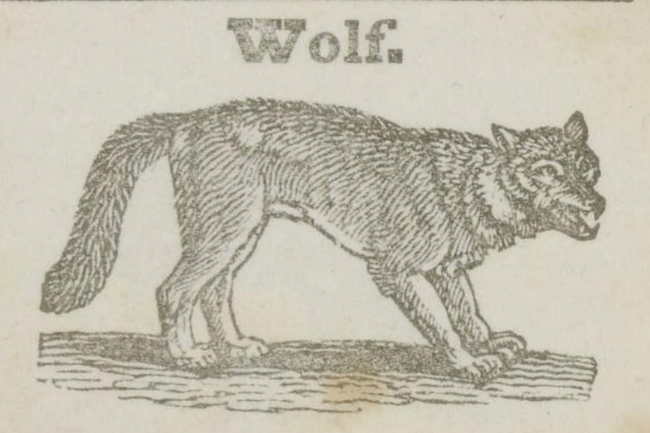
Colorado releases wolves in Grand County.

The State of Colorado, in a voter backed initiative, released five wolves in Grand County.  The move was opposed by area ranchers and not keenly supported either by Wyoming.


Wednesday, December 13, 2023

Match makers.


The U.S. Fish and Wildlife Service captured a Mexican Wolf (a type of wolf, not a wolf that is literally from Mexico) in hopes of that she'll breed with one of two captive Mexican Wolves at a facility in New Mexico.

The US is attempting to restore the endangered population.

