Showing posts with label trends. Show all posts

Tuesday, December 9, 2025

Lex Anteinternet: Cowboy Boots

Lex Anteinternet: Cowboy Boots: Title: An array of boots at the F.M. Light & Sons western-wear store in Steamboat Springs, Colorado.  Library of Congress photographs...

Cowboy Boots

Title: An array of boots at the F.M. Light & Sons western-wear store in Steamboat Springs, Colorado.  Library of Congress photographs.

A long, long time ago on this site, I started a thread on  cowboy boots.  Maybe as long ago as three years, or so. That's not as unusual as it might seem, a lot of threads linger as drafts on this site long before they're published.

19th Century cowboys. their boots are not very visible in this photograph, but where you can see them, they are very high shanked boots.

What is unusual is that I lost it.  But I don't think I'd gotten very far in it before I deleted it.  So, here we are starting afresh, which in this case is pretty much the same as starting.

I like cowboy boots.  I often wear them to my office job, but I've also worn them in the role for which they're actually intended, so I have pretty strong opinions on them.  And  they're also sort of bizarrely tied into the period which we've been looking at, in the context of how they've changed over time and what we now think they are.  I also frankly think that a lot of the history that gets circulated about cowboy boots is frankly wrong.

That history, if you've looked into it at all, generally holds that cowboy boots basically didn't exist until some time after the Civil War, at which time they came into being, sort of all of a sudden, in the 1870s or 1880s. Well, not so much.  Indeed, what we call "cowboy boots" had basically been around a lot longer than that.  

Yep, I'm claiming that the common story of the cowboy boot is flat out wrong.

I guess, with that being the case, we have first ask, what is a cowboy boot?

Well, in its proper form, a cowboy boot is a pull on riding boot with a high, scalloped, heel that's designed for use in a wooden stirrup.  Steel, iron or brass stirrups actually are not the same as wooden stirrups at all, in use, so perhaps we should start there.

Author, riding Wade tree stock saddle, with broad wooden, tin clad, stirrups.

Jonathan Wainright being promoted to General at Ft. Myers Virginia, 1938.  Wainright would be transferred to the Philippines prior to World War Two and would go on to serve as a captive of the Japanese after the fall of the island to the Japanese.  He received the Congressional Medal of Honor.  Here you see the two types of stirrups in use by the U.S. Army at the time. Wainright is riding a flat, English style saddle (likely an officer's pattern then in use) while the two  officers next to him are riding M1928 McClellan saddles equipped with wooden stirrups and stirrups hoods.  Wainwright's boots are not visible but are most likely the field boot then in use.  The officer on the right is wearing M1923 lace up cavalry boots.

Metal stirrups, and wooden stirrups, go relatively far back, although we would do well to note that stirrups themselves came into wide use during the Middle Ages.  Indeed, not only did they come into wide use at that time, they were a technological revolution that greatly enhances the fighting ability of a mounted man allowing the Age of Chivalry, i.e., the mounted knight, to basically be possible.  This isn't to say there weren't cavalrymen before that.  There certainly were, but once the rider could keep his seat with the aid of his feet, his utility and fighting ability was greatly enhanced.  Indeed there is a "stirrup theses" that deals with the revolutionary impact of the stirrup upon mounted combat in Europe, and hence upon history in general.

This isn't  history of the stirrup, but we should note that relatively early on there were wooden and steel stirrups.

 
Wide wooden strirrups are a feature of this Wade Tree saddle. Here they are clad with sheet metal on the outside.


Wooden stirrups, as a general rule, tend to be more "rustic". If there's an economy of resources we tend to see wooden stirrups.  Saddles are mostly, at least classically, wood and leather, so keeping on keeping on with wooden stirrups makes sense if that's the material you have at hand.  And if you don't have that at hand, you probably aren't making any saddles to start with.  Assuming that, you don't really need that much metal otherwise.

Leather wrapped wooden stirrups on an Association tree saddle.

Riding with wooden stirrups presents some different considerations than steel stirrups, the principal one for our purpose being that wooden stirrups tend to be quite large.  That's fine, but that presents another problem. . . keeping your foot from going through the stirrup.  If that happens you have a true disaster in progress.

 
Why cowboy boots have the shape that they do.

The solution albeit a partial one, for this problem has always been proper footgear.  Indeed, proper footgear is or should be a major consideration for any rider.  People who ride in tennis shoes should be flogged, as its dangerous.

 
Cowboy with jeans tucked in boots, using taps over his stirrups.  Very traditional set of cowboy gear.  This photograph was taken at the 2010 Sheepherders Fair.


Anyhow, the traditional riding boot for wooden stirrups is a high topped boot (which all real riding boots are, as a rule) with high heels made from leather sections, with leather soles, a somewhat pointed toe, and a scalloped heel. The boot is designed as much to let you get your foot out as anything else.  That's why its pointed, that's why its normally a leather sole, and that's why the heel is scalloped.  If it goes through in a disaster, maybe the scallop will let the boot back out. . . maybe.


 Cowboy Ned Coy on "Boy Dick".  Coy is wearing a Boss Of The Plains hat and scalloped boots.  From the popular threads on hats and caps.

It isn't laced either, due to an economy of resources, because it isn't meant to be walked in all  that much, because it is meant to allow your pants to inside the boot, and it might be capable for the boot to be jerked away in a really bad disaster.

This sort of boot has existed for a really, really, long time.  And its existed in more than one location for a really long time.  Indeed, I've even seen photographs of Afghan riders, well before the tragic Soviet period when things were less mess up there, using a boot roughly of this description.

And I've seen at least one photograph of a Civil War Army officer wearing a boot of this exact type, during the Civil War, with huge rowled spurs.

Don't tell me, therefore, that these came about after the Civil War. They did not.

They were around in some form a long time before the Civil War.

They were popular with riders in the West who were employed in cattle work quite early on for obvious reasons.  Western stock saddles uniformly featured wooden stirrups and still tend to.  Cowboys, moreover, did very little ground work if they could avoid it. And their horses tended to be rank.  A boot of that type is exactly what they needed.

They were distinct, however.  Mostly this was because most riding boots in the United States mid 19th Century were low heel, or partially low heel.  Most stirrups east of the Mississippi were steel or iron.  Not all, but most.  And  most men who wore boots, and it was mostly men, were were doing a lot of ground work as well. So, most boots reflected that.

Indeed one big user of horses, the U.S. Army, didn't even officially issue a riding type boot until late in the Civil War.  Otherwise, it simply issued its ankle high shoe to everyone. That says something about the focus that generally existed on the topic.  It probably also says how much more riding had started to go in the service during the Civil War.

 Cavalry orderly wearing low topped riding boots.  These boots may or may not have been an issue pair, as there was never an official Civil War general issue pattern of cavalry boot.

Union cavalryman, Civil War.  He's likely not wearing riding boots at all, but rather the issue ankle high service shoe.

Union cavalry officer.  Officers purchased their uniforms, but the pattern of boot shown here became very common during the war and was ultimately issued to enlisted men.  High topped, somewhat scalloped heel.

After the Civil War the Army determined to issue riding boots to cavalrymen and started to do so. As I'm not an expert on this topic, and as this isn't the history of the military riding boot of the 19th Century, I won't try to detail it, but a variety of high topped, medium heeled boots were issued all the way through the remainder of the 19th Century until the 1890s, when the service shoe for cavalrymen oddly came back in.  

 Detail from Edgar Paxson's meticulously researched Custer's Last Stand.  Paxon here depicts the cavalry boot in use in 1876 very well.  A very high topped boot than ran up over the knee to protect the knee, square toes (they had no left or right) and slightly high heels.  This boot, while a good design, was commonly regarded as uncomfortable by soldiers which may, in part, have been because they were built by Federal prisoners who had, therefore, relatively low motivation.

The common story on the cowboy boot accordingly holds that men went home wearing their boots from the Union and Confederate armies and then went into livestock work, and the cowboy boots was born.

Not so much.

For one thing, the story is really probably more the other way around. Confederate cavalry men were at first drawn from stock working men anyhow and they were already wearing riding boots.  If the boots made it through the war, a doubtful proposition, they just went home wearing what they'd left with.  If their boots wore out, they would have been lucky to get a good replacement pair of riding boots.  No doubt some did, but those boots would have been of no discernible pattern and they would have really just been riding boots.

Amongst the very first cowboys driving north Southerners would have been more common than Northerners, but not for long.  Be that as it may, it 's highly doubtful that piles of Union riding boots ended up being worn by discharged Union cavalrymen turned cowboys.  And as noted, riding boots had been around for eons prior to the Civil War with all of their basic details well established.  It was the Army that was slow to adopt them.

Cowboys near chuck and supply wagon.

Rather, after the Civil War the frontier opened up for cattle and the cowboy came onto the Plains.  He was wearing riding boots, and riding a wooden stirrup saddle that was evolved, but not much, from those used by vacqueros in Texas and Mexico.  Their boots reflected that, and fairly rapidly they became to take on some distinct features, although perhaps not as distinct as we might suppose.

It might be noted, and probably should be noted, that cowboy boots are one item that cowboys did not adopt from vaqueros and caballeros.  Mexican agricultural horsemen did not wear cowboy boots, but rather an ankle high pointed toe, moderate heeled, boot.  That's a bit surprising, but when we consider how they dressed perhaps it is not as surprising as it might at first seem.  They tended to wear leather leggins below the knee for protection if they needed it, and they also wore both chapaderos and later half chaps, known to Western horsemen as chaps and chinks, for protection.  They also wore wool clothing almost uniformly.  While I don't know t hat its related, living and working in a hot environment, the high topped boots may have been less attractive to them than to riders further north.  Additionally, most Mexican cowboy gear actually uses an economy of leather, leather being the product which Mexican cattle were actually raised for, and that may have reflected itself in their boots design.  Leather economy can impact boots permanently, as we shall shortly see.

 Emiliano Zapata (seated, center) and his staff.  There's a mix of clothing here, as there typically is in photos of Mexican revolutionaries (the figure on the far left is wearing a type of boot that darned near resembles one we'll address later, the packer) but all the seated men are wearing botin charro, a type of ankle high, pointed toe, riding boot.

So the scalloped heeled boot came to be strongly identified with cowboys, and at the same time cowboys, who tended to invest a lot of their tiny income in their gear, that being their hat, their boots, and their saddle, sometimes bought cowboy boots that had elemental elements.  Farmers didn't buy boots that had any ornamental elements, in contrast.  Spending a lot of money on their limited equipment, they wanted it to look good and distinct when they could. And that caused the Mexican influenced ornamental stitching on cowboy boots to come about.  While it does create a distinct appearance, the boots are really only slightly evolved from other riding boots in common use in the mid 19th Century.

 My regular cowboy boots.  The ones I wear to work, when I wear cowboy boots to work.

My working cowboy boots.

And of course Americans became fascinated with cowboys quite early on.

Cowboy boots basically assumed that form quite early, and indeed they retain it if they're really traditional boots.  A working 20th Century cowboy with high shank boots could walk into a 19th Century camp and pretty much not have anyone take much notice of his footgear, assuming that he went for something relatively traditional.

Well, like a lot of things, the boots changed as a result of a war.  World War One to be exact.

 Stretching leather, about 1915.

Because World War Two was such a colossal war, and because we tend to simply accept the line that the United States was the "arsenal of democracy" during the Great War, we have a pretty skewed concept of American production in the World War One time frame. Simply put, it was a mess.

Not only was the Army trying to raise a force, at breakneck speed (more rapidly by quite some measure than during World War Two) but it was trying to deploy it overnight.  It was also trying to equip it overnight.  The peacetime Army didn't have anywhere near the amount of stuff necessary to equip the huge Army that the US was trying to raise, equip, ship and deploy in 1917.

And this included leather goods.

The US didn't really even know what it needed in the way of leather goods, so it let out contracts for things like saddles and boots in absurdly large numbers.  There's a real reason that M1904 McClellan saddles are so common.  They made so darned many. Same with boots, the numbers made were astounding.  Absurd, even.

With that sort of demand going on for leather goods, the supply became very strained, and cowboy boots were the victims of that. The leather for high topped boots just wasn't there. So, as a wartime measure, bootmakers introduced the "stubbie" or "pee wee" boot, which is what most people, at least those who aren't cowboys, wear today.

 Tom Mix, 1919.  Mix was an actor, not a cowboy by trade, although the World War One veteran did buy a ranch in Wyoming after the war and he actually ranched here.  Anyhow, actors make notoriously bad examples of what cowboys actual wore, and this is no exception.  The hat is far too large for anything outside of Texas (where sugarloaf sombreros were really large), the pistols are M1873 cavalry models, which had 7" barrels and which were not favored by cowboys, who instead favorted the 5" artillery model. the pants are way too tight. The boots, moreover, are peewees. The heels, however, are just right for the era, and not uncommon amongst working cowhands now.

That was the wartime solution.  And it impacted how the boots were actually worn. Prior to WWI cowboys normally tucked their trouser in their boots, and they still sometimes will, as the photo posted above shows.  This was the routine habit, although sometimes they'd pull their pants down over their boots.  Having worn boots both ways while riding, if I'm going to ride for a long time, I'll tuck them in.  More comfortable, for the long haul.

But you really can't do that very well with pee wees, and cowboys who had to buy new boots during the war were embarrassed by the economy of leather and how it looked, so they took to pulling their pants down over their boots.  Better to wear out your pants and get them dirty than to look like a boofador.

Traditional boots do not go on as easy as peewees.  And you'll want some high socks if you wear them also.  My Olathe traditional mule hide cowboy boots.

Well, cowboy boots have always been regarded as stylish and have received a lot of non working wear by non cow hands.  The peewee boot was tailored made for the person who liked the style, but who didn't ride every day. Indeed, as I have retained the old really high style, I can attest that getting them on and off isn't easy.

And in truth mid height boots worked out okay for a lot of working applications. So the peewee, unless it was really low, quit being a mark of shame and became the common boot fairly quickly, save for the ones that had really low tops (which some did). By the 1920s a boot like that sported by Tom Mix above was pretty common, probably more common than the kind that ran to the knee.  With the spread of this sort of boot on the range, and in town, cowboy boots really entered sort of a new era.  The old style kept on keeping on, but a new style, worn by a lot of people in town, arrived.

 These aren't cowboy boots, they're Wellingtons.  Marketed, however, as "Ropers".

All along a similar low shanked ridingp with your heels, down with your head boot was around as well, the Wellington.  Named after the Duke of Wellington, who favored them, Wellingtons' were a peewee variant of the common Riding Boot, that boot worn by those who rode flat, or "English", saddles. Low topped, and low heeled, they always had a following amonst those who rode a bit or who rode flat saddles but whom didn't favor the knee high boot generally worn by those who used steel stirrups.  They were quite similar, in some fashion, with some of the lower shanked boots worn by Army officers in the 1860s through the 1890s, and therefore had a natural retained following there.  Some European armies, including the English Army, flat out adopted them as riding boots.  At some point in the 20th Century, and at least by the 1940s, the U.S. Army allowed them as alternative footgear for dress wear and they became particularly popular with pilots as dress gear. So much so, in fact, that after the USAF was officially separated from the Army after World War Two black Wellingtons were allowed as private purchase dress shoes for officers.

 
Working rancher with very low heeled boots, perhaps Wellingtons.


The popularity of Wellingtons plateaued however until some marketing genius at the Justin company thought of re-branding them as "Ropers'.  Where this idea came from is anyone idea, but it was a marketing stroke of genius.  With the rebranding Wellingtons crossed over into the cowboy boot market and someawht remain there. Their popularity seems to have diminished a bit, but then boots with "walking heels" have increased in popularity as well, with those two boot types occupying each others niche, more or less.

While on this topic, let us dispel the notion that the type of rubber or synthetic boot the English call "wellies" are Wellingtons. They are not.  Apparently the name "Wellington" was applied to them at some point due to a purely superficial relationship they bore to real Wellingtons.  The British users truncated that  name to "wellies", but whatever they are, they are not Wellingtons.  The Duke of Wellington would not be pleased if you thought so.

Wellington at Waterloo. Seriously, the man was not wearing rubber boots.

With cowboy boots as fashion, we do of course see varieties of them.  In some eras, the 50s in particularly it seems to me, the toes became very narrow.  In others, the toes are fairly round.  Square toes were very common in 19th Century boots and have recently returned.  Originally, that was a manufacturing item, as square toes were easy to manufacture and with some boots and shoes there was no left or right.  Now, it's just a matter of fashion.

 
Working rancher with a pair of cowboy boots with a walking heel.

Heel height waxes and wanes as well, although with modern boots you don't seen the really high "doggin" (ie bulldogging) heel nearly as much as you did in earlier eras.  You still see them, however.  As noted, "walking heels", which are basically a conventional shoe heel, are now also common and you see them in use even by working hands.    Every now and then, however, doggin heels will enjoy a comeback, and they never really go away.  As noted, working hands will wear them, and in towns more than a few folks wear lower riding heels.

Indeed, I suppose only a tiny fraction of cowboy boots are worn by people who actually ride. For that reason it'd be interesting to take a census of actual working hands and see what they wear.  By my casual observation, really high topped boots are more common with working hands than a person might suppose, which makes sense.  Medium height boots are fairly common as well, but you do see stubbies and ropers out there, as the photos in this thread attest to.  In town, of course, most folks aren't wearing the really high boots like I do.  Indeed, I'd guess only a tiny fraction of people who wear cowboy boots in town do that.

Cowboy boots aren't the only riding boots, of course, and we'll deal with that on a later thread, to the extent its relevant to this site and the period of time it focuses on.  But cowboy boots are interesting in general, so in looking at footgear, we've started off here.

Wednesday, November 26, 2025

Lex Anteinternet: Monday, November 26, 1945. Now's the Time, Wolves...

Lex Anteinternet: Monday, November 26, 1945. Now's the Time, Wolves...: Recorded on this day in 1945:  The Sheridan Press reported on wolves and war brides. The Rocky Mountain News, which I remember from the 70s,...

An interesting example of how the worm turns:

Monday, November 26, 1945. Now's the Time, Wolves and War Brides, Questionable claim about Goering, Test tube babies in Virgin hospitals, Japanese social insurance, ties for Christmas.

Recorded on this day in 1945:

 The Sheridan Press reported on wolves and war brides.


The story on the big wolf is ironic in a contemporary context.  Wolves were wiped out in Colorado, probably and in Wyoming, probably, until the major reintroduction effort of the 2000s began.  It's been a huge success in Wyoming, for which I'm glad, in spite of my initial skepticism.  An ongoing effort is occuring in Colorado, which is meeting a lot of opposition in the anti nature Freedom Caucus era.


Tuesday, November 4, 2025

Lex Anteinternet: Saturday, November 3, 1945. Wyoming Game Wardens Game Wardens Bill Lakanen and Don Simpson murdered.

Lex Anteinternet: Saturday, November 3, 1945. Chinese Civil War, G...: China's civil war was acknowledged now to be a major conflict and two Game Wardens were found dead near Rawlins. The Chinese Civil War w...
Linked over from Lex Anteinternet, which also discussed the Chinese Civil War.

Saturday, November 3, 1945. Chinese Civil War, Game Wardens Killed.

China's civil war was acknowledged now to be a major conflict and two Game Wardens were found dead near Rawlins.


The Chinese Civil War was the topic of a political cartoon as well.

The murdered Game Wardens were Bill Lakanen and Don Simpson who were killed by ardent Nazi sympathizer and German immigrant Johann Malten.   The same Game Wardens had arrested Malten for game violations when investigating, interestingly enough, claims that Malten had been involved in espionage and was relaying weather reports on shortwave, something that was illegal during the war when there was a blackout on weather reporting as the information was useful to submarines.  Upon visiting Malten's cabin in the Sierra Madres they found he had committed numerous game violations.

On this occasion they were stopping by to see if Malten had continued to ignore the law.  They were shot down out of hand when they arrived.

Malten burned his cabin down and it was officially reported that he'd died within it, although the evidence of that is very poor.  There were reported sightings of him for years thereafter.

And a selection of 1945 cartoons.


I knew about this story because former Wyoming Game Warden David Bragonier wrote about it in his book about Wyoming Game Wardens, Wild Journey: On the Trail With a Wyoming Game Warden in Yellowstone Country.  It's a good book, and I recommend it.

Bragonier discusses this event, although I clearly don't remember everything I read in his account.  That's probably not too surprising as I read the book in 1999.  What I recall but didn't see in the accounts on the murder you can find here is that the investigation was associated not only with the killer's German nationality and his strong Nazi sympathies, but also with shortwave radio transmissions that could not be pinned down.  

There's a bunch of interesting things that could, and if a person had time, should be explored here as the story raises all sorts of undeveloped oddities.

One of them is that Lakanen and Simpson are two out of the three Wyoming Game Wardens who were murdered by immigrants (to the extent I know why the various ones who lost their lives in the line of duty did).  I'm not saying that immigrants murder game wardens, but this is an interesting fact.  The other one is John Buxton, who was murdered by a youthful Austrian immigrant in 1919.  In that instance he had taken a .30-30 Savage rifle from a 17 year old who drew a revolver and killed him.  The reasons that Buxton was checking the boys is unclear.  Stories frequently claim they were hunting out of season, but that seems incorrect.  They were certainly overarmed for rabbits, however, with a .30-30 being way too large for that pursuit.  Buxton might have been checking them as their activities seems suspicious, which frankly they do, or because there was a state law at the time that prohibited aliens from carrying firearms.

The killers handgun, we might note, was concealed.

I only note this as its odd.  Hunting is common in Germany and Austria, and indeed there's a strong hunting culture there, but it's highly regulated.  As a result, poaching is fairly common as well, even though its highly criminal.  Indeed, one of the SS's units during World War Two, the Dirlewanger Brigade, was originally made up of convicted poachers, although it moved on to other criminals over time.

Anyhow, I wonder if these people were just hugely out of sink with any culture at all.

In the earlier murder, it's been noted that the young men had been in run-ins apparently with Italian immigrants in the same location. Austro Hungaria and Italy had been on opposite sides of World War One.  Again, I'm not saying that caused the murder, but I do wonder if they conceived of themselves as being very much on the outside of things.

Another interesting thing, although having nothing to do with the focus on this page, is the lingering Nazi sympathies in some quarters amongst German immigrants who chose to continue to live in the country.  That carried on, quietly, well after the war, even after the news of the Holocaust became known.

Odd.

If Malten was actually a spy, that may explain the killing in and of itself.

Another thing this story oddly brings up is the extent to which trapping remained economically viable.

Trapping was pretty common in Wyoming up into the 1970s, when there was a fur market price collapse.  I had, well still have, traps, although I haven't set them for decades.  In the 1970s high school kids like myself supplemented our incomes by trapping or hunting coyotes for their furs.  The market was so lucrative at the time that there were people who flew in from out of state and hunted coyotes near Miracle Miles, something we didn't appreciate very much as we didn't have those sorts of resources available to us.  The Federal Government was also big into predator control at the time which we also didn't appreciate much for the same reason.

Furs are, fwiw, an actual renewable resource fabric, one of the few.

Fur coats were a big deal for women at this time and would, again, be throughout the 1950s.  They were not nearly as much of a luxury item as people like to remember.  My mother had a heavy mink coat that she brought down from Montreal that she wore on really cold days.  As a kid I loved it when she brought it out, due to the feel of the soft minks.  

It was, in spite of Donald Trump and the Sweet Home Alabama crowe dof the GOP may believe, colder then.

I've never looked into it but I suspect that synthetic fabrics had as much to do with the decline in furs as anything else.  That started during World War Two and is well evidenced by the Air Force's switch from sheepskin flight altitude flight jackets to synthetic ones.  That trend continue into the 1950s and I suspect it just generally caught up with fur coats by the 1980s.  Indeed, the association of fur with luxury somewhat increased in that time, with it generally being the case that things are regarded as luxurious not only for their scarcity, but because they really aren't needed.

More on fur clothing some other time.

I guess the final thing I'll note is how dangerous of job being a game warden is.  A lot of the crimes you investigate are, by default, armed crimes.  

Given that, it's amazing to look back and realize that when I was a kid wardens didn't carry sidearms.  They weren't allowed to.  I recall when that changed and many did not take up what was then the option to carry them.  Now they're required to.

Indeed, I was recently stopped by a warden and frankly he wasn't very nice.  That's a new trend as well.  I don't like it.  But not only was he not nice, he was extremely intimidating carrying a government issued handgun on a government issued gunbelt and wearing a government issued flak jacket.  

I've really hated the militarization of the policy and this is all part of it. Everytime I see a policeman anymore, including a game warden, they're dressed like they're going into Hue in 1968.  All policemen of every type are civilians.  They're simply deputized civilians.  They shouldn't look like an occupying army.  And if the treat people rudely, and many do, and are standing their armed treating you like you are a detained Vietnamese villager, it's scary.

A little of that comes across, I'd note, in Bragonier's book, in spite of my recommendation of it.  It's a good book, but he displayed an element of contempt for the public he served in it.

David Bragonier must be, I'd suspect, gone to his reward by now  His biography indicates that he was born in Iowa in 1937 and moved to Wyoming after graduating high school.  He became a game warden over twenty years later, in 1958, something that would be extremely difficult to do now due to the education requirements.  He briefly worked for the Forest Service before that.

A man becoming a Game Warden at 39, which he did, would be really unusual now.  Probably impossible.


I actually have twice tried to plow that field myself, rejecting it once as I just go engaged.  I would have been about 30 at the time.  It'd be completely impossible for me to become a Game Warden now as I not have a wildlife management degree.  I suppose that requiring that specific degree is a good thing, but I do miss the days when a lot of Game Wardens were basically from ranching families.  Even when I was that age, many of them fit that category.  My cohort was probably about the last one that would meet that description.

I went on, of course, to a successful career in the law, and I was already a lawyer, of course at age 30, and had been for a few years.  I took one fork in the road.  You aren't supposed to look back.  Luke tells us, in a different context, that "No one who puts his hand to the plow and looks back is fit for the kingdom of God".  I'll confess I've looked back a lot.

Having said all of that, I spoke the same warden (turns out he's very green) as I found a poached elk about two weeks later.  I had to guide him in, by phone, to the location.  He was very nice on that occasion, and that's how things should be.

Friday, October 17, 2025

The Work Truck Blog: Real transmissions.

The Work Truck Blog: Real transmissions.: 

Real transmissions.


About once a year I go on an unhinged campaign for the restoration of manual transmissions.  I absolutely know, right from the onset, that it's totally pointless.  Nonetheless, the fact that no manual transmission pickup trucks are made in the US, outside of the Jeep pickups, really angers me.

100% of the reasons stated in support of automatic transmissions are pure unadulterated bullshit.  The real, and only, reason they're put in pickup trucks is that most pickup trucks are driven in cities, including ones that have fanciful outdoorsy names and have something like "off road edition" emblazoned on their sides.  If it's got an automatic transmission, it's the kawaii thirteen year old girl edition.  That's it.  It's made for wimps who want to pretend their outdoorsy and don't know how to drive.

The market, of course, is what controls this, and ever since the day guys who never get outside the Denver city limits started dominating the market, this is what we've ended up with.

Now, in defense of engineering, automatic transmissions in trucks have gotten much better than they used to be.  Indeed, ever since General Motors began to put Alison transmissions in their diesels, they've been pretty good. None of that changes the fact that all of the disadvantages associated with automatic transmissions fully remain.  You are actually using the engine to drive the transmission, which is inherently inefficient, and you are letting hydraulic pressure determine when to shift gears, which is mindless.  It can also be dangerous.  All of the features that engineers built in to allow automatic transmissions not to be mindless killers are ignored by everyone who drives one.

And the fact that they have a lot of extra parts means they're going to wear out more quickly.  I have had in the various vehicles I own two transmissions wear out. . . both of them were automatics. 

And, yes, I've owned vehicles with automatic transmissions.

So, anyway, it always goes the same way.  I get angry about it, and usually when it dawns on me that I can never, ever, buy a new vehicle now as they all have automatic transmissions.  I end up emailing the Dodge dealer asking for a cab and chassis with no transmission, as I can take care of the transmission part.

"Um. . . . we can't do that".

Oh bullshit, you certainly can.

Occasionally I called Dodge, which I did this week.  I ended up with some poor (probably Filipino, based on the accent) woman who tried to help.

"I want a cab and chassis with no transmission, or I want you to put in a G56 transmission and I know that you have some around there".

"Um. . . . just a moment sir. . . . I tried to ask somebody but nobody knows the answer to this. .  I'm sorry".

The current diesel engine in Dodge's is the the B6.7.  I really wonder if there's any new made manual that will mate up to it, although the costs of doing so would likely be insane. I wonder the same about the somewhat bigger Cummis engines, up to the the L9 and B7.2.  I'd think there's have to be one for hte 7.2.

Sunday, June 2, 2024

Lex Anteinternet: Boy Scouts no more.

Lex Anteinternet: Boy Scouts no more.:   

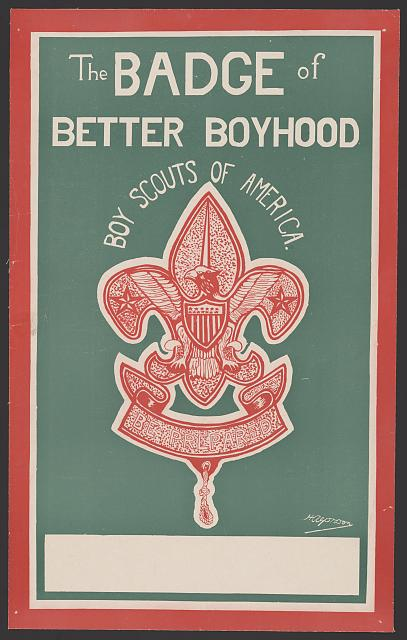
Boy Scouts no more.


The Boy Scouts of America is changing its name to Scouting America

Boy Scouts of America has announced it will rebrand as Scouting America, which, if media impressions are any measure, is a very big deal. Within days of the announcement, the collective online impressions of the news surpassed 14 million, according to the organization — a staggering figure that underscores the institution’s widespread influence.

Article in the Tribune. 

Does it really suggest the "institution's widespread influence", or its tragic decline from what had been that influence?

I teed this up quite a while back and since that time the Southern Rockies Nature Blog, which is linked in here, has a really nice and personal blog entries on this item, entitled Bye Bye Boy Scouts.  I can't really say goodbye to the Scouts that way, as I never was much of a Scout.

Usually I say I was never a Boy Scout, but that's not true.  I was briefly.  Probably around when I was in 6th Grade, or at whatever point it is when a person goes from Cub Scout to Boy Scout, when there were Boy Scouts.  I didn't really last long in it, and it's hard to say exactly why.  Part of it was, I think, as they group I was in, while they did do things, was slow to get around to doing them.  The several merit badges I earned while I was in, I just picked out and did by myself.  That "by myself" thing probably had a lot to do with it also, as by this time my lifelong introvert nature was firmly set in, and unless compelled by external forces or acclimated by long exposure to a group, you'll feel uncomfortable in a group.  Usually I say that I'm "not much of a joiner", with this being, I think, part of it.

Another part may simply be that I'm highly rural and was then.


We don't tend to think of it this way, but Scouting was an urban movement.1   Aware of the inadequacy of young British men in the Boer War, Lord Baden-Powell, who after the war became the British Army's Chief of Cavalry, founded the Boy Scouts.  The idea was twofold, those being 1) British boys had become a bunch of anemic unskilled wimps who needed some manning up from nature, and 2) British boys had become a bunch of anemic unskilled reprobates who needed some Muscular Christianity.

The original organization had no place for girls.  Girls wanted to participate in things, and soon had their own organizations.  The two didn't mix.

And frankly it didn't mix for good reason There are such things as manly, and womanly virtues.  Much of what the original Boy Scouts sought to address was spot on in its observations, and Scouting did a really good job of addressing them.  Often affiliated with churches, Scouting groups were successful in teaching boys a lot of valuable outdoor skills that often stuck with them for life, and they were benefitted in that goal by the absence of girls, who at a bare minimum are extremely distracting to boys and young men.  Given their natures, young women are usually, although not always, much less distracted by young men.

There's been a lot written on the decline of the Boy Scouts, and there are various theories about it.  One of the blogs linked in here, The Southern Rockies Nature Blog, has an article about it that's worth checking out.  Whatever it was that brought it to its current state, it was still a pretty strong organization in the 1970s, when I had my brief association with it. At that time, even in the rural West, a lot of boys were part of it, and for that matter quite a few of their fathers had a strong association with it.  Being in the Boy Scouts (which my father never was), was part of a multi generational thing.

Signs of decline were there even then.  Of my good friends, only one was a Boy Scout, which his father had been.  Another had a father who had a strong history of Scouting, but my friend wasn't in it.  I was in a youth organization in my early teens, but it was the Civil Air Patrol, which with its martial aviation theme was a completely different type of organization.  Rural kids, of whom I knew a lot, tended to be in the FFA, which had direct practical application to them.

I wish I could pinpoint what was going on, but I really can't.  I've tried to do so here before, and probably haven't been successful.  Looking at the topics addressed in this thread, however, I think part of it may have been that in the post World War Two era that went into the 1970s, the retained gaze upon the rural really faded.  Even television reflected that as programming went from the rural focused on the 1960s, such as The Andy Griffith Show, The Beverley Hillbillies, and Green Acres, the last two of which anticipated the change, to urban centric dramas such as Newhart, The Mary Tyler Moore Show, WKRP In Cincinnati, etc.  Americans had been moving into the cities for a long time, but suddenly they quit looking outside of them.  Even a gritty urban environment depicted in something like The French Connection was celebrated in a way.  It's notable that a figure like Clint Eastwood, who had come up in westerns, started appearing as Dirty Harry in urban California at the same time, and Dirty Harry, like Popeye Doyle, wasn't portrayed as any sort of Boy Scout.

The atmosphere of the late 60s also brought in destructive forces that we're still dealing with.  The resolute male admired and celebrated from the era of The Strenuous Life on to the Ballad of the Green Berets suddenly, in the Strauss Howe fashion, yielded to the feminized and marginalized male, at least in the dominant WASP culture.  It's never really recovered, and we can see some of the reactions to that playing out in society now.


In that atmosphere, Scouting attempted to adapt, but that's part of the problem.  The campaign hat went out, and the red beret came in.2 Out with the old, and in with the new.  The institution already had, however, its close association with Christianity and a sort of "goody two shoes" reputation.  It probably should have just doubled down on that and its rural focus, but it tried to adapt instead.

Like other institutions that were heavily male and which had become somewhat soft, it also began to be plagued, apparenlty, with male on male sexual conduct.

People hate to discuss this part, so the realities of this should be noted.  One of the byproducts of keeping boys and girls separate in Scouting is that it not only allowed boys to focus, but it kept boys and girls out of close proximity to each other. Scouting involves teenagers.  No matter how focused or watched, when male and female teenagers are together, some of them will misbehave in ways that create life changing byproducts.  A person only has to look at the expansion of the role of women in the military in order to appreciate this.3 

We already know that the largest group of abusers of teenagers in this fashion are teachers.  The decline in personal morality brought about by the Sexual Revolution helped unleash this, and I'd wager that a person could easily find a story of a teacher engaging in this conduct with a teenaged charge nearly every month.  I ran across one just last week, in which the assailant was a female teacher and the victim something like a mere 13 years old.  If this happens in an institution in which being discovered will result in the end of a career and jail time, and in which getting caught is highly likely, it's going to happen in situations in which this is much less discoverable.

Put bluntly, as the Muscular Christianity focus waned, the Sexual Revolution came on, and an overall feminization of society advanced, predatory homosexuality in the Boy Scouts became inevitable to some degree, and it had probably always been there at least to some extent.  It's customary at this point to note that not all homosexuals are predatory, and that only a minority are, which is absolutely true, but it happened.  That some people would let their behavior go in an all male setting shouldn't be any more surprising than those instances of male coaches preying on young teenage female athletes.  It's reprehensible, but without additional external controls, it was going to occur.

This helped cause Scouting's popularity to drop off massively, and not surprisingly. Parents quit encouraging their children to be Scouts.  Not really knowing what to do about it in the context of the culture, Scouting opened its doors to girls. This predictably hasn't helped, and it won't.  Scouting will, I'd guess, be largely taken over by girls, but it won't be an organization that Boy Scouts prior to the 1970s would recognize.

There's something to all male bonds between conventionally oriented males that is unalterably different from ones with women.  Probably our biology has a lot to do with it.  The mateship that exists in military units, for example, which are all male, is completely different from an organization that has even one female in it.

The larger tragedy is that the very thing that Scouting was created to address in the first place, in large measure, is probably need as much now as it was then.  The source of the problem is large the same, the urbanization of the country and the corrupting influence of urban life, combined with the absence of male roles, something that existed in the very early 20th Century and something that exists now, albeit for different reasons.  Scouting, by having gone first soft, and then semi feminized, is no longer the organization that it was, that addressed that.


Footnotes:

1. Recently I read Doug Crowe's book A Growing Season, which is extremely off color, but extremely interesting.  The back of the book, where the short review is, terms it a novel, but it isn't.  The figures in it are all real, I either know of them or actually knew some of them.

It occured to me in posting this that part of the reason that the Boy Scouts lost its appeal to me here is that in a highly rural setting the first purpose of scouting, to introduce the outdoors, will be taken up by those who have a strong affinity towards it, which most young men do, all on their own.  Going to Scouting events actually retards a person's ability to go outdoors and do what you want, with your young male associates, once somebody is of driving age, or at least it did then. As soon as somebody was 16, we were pretty much loose in the world.

As noted, not surprisingly, our companions in these forays were all male.  I can't recall going on an outdoor adventure of any kind with a female of my own age until I was at the University of Wyoming.  Nature segregates us in that fashion, even if society doesn't want us to.  As A Growing Season demonstrates, that certainly gives rise to opportunities to engage in vice, although did not in any serious fashion, and the few of my fellows who really fell into it did so, notably, in town.

2.  Only if troops adopted it, however.

3.  Without putting too fine a point on it, two women I know of who were justifiably very proud of their military service, and neither of which might be regarded as libertine, had early discharges from the service for this very reason, followed by the birth of their oldest child not long after.  The service with the biggest problem, seemingly, is the Navy, where close proxmity on ships has caused an alaraming pregnancy rate in some instances.

Related threads:

Youth organizations. Their Rise and (near) Fall, or is that a myth? And, did you join?


Blog Mirror: What Scouting Has Lost