|
|||||||||||||||
|
|||||||||||||||
|
|
|||||||||||||||
|
|||||||||||||||
|
Great.
Making a formerly pretty wild area an effective city park.
This is just the kind of bullshit that ruins everything.
I hope the 4x4s coming off the muddy roads rip this newly paved road to shreds as soon as possible.

Commorating the creation of the National Park Service in 1916, whereby the NPS relieved the United States Army, which was pretty busy with other things, of the duty of patrolling the parks (the Park Service campaign hat recalls the Army's M1911 campaign hat.

The Park Service and the parks themselves are one of the great things about the United States. If you have nothing on the plate today, and have a park nearby, go check it out if you can, unless of course you live in Utah, in which case you can sit in side your hovel and imagine a future in your state in which all the lands have been sold to big money.

Related thread:
The Cheyenne paper pointed out that summer was drawing to a close.


It also bears the huge risk of the application of the Law of Unintended Consequences. The odds of it prevailing are regarded as long, but the President could avoid the matter by withdrawing all the lands immediately and declaring them national monuments, or the U.S. Supreme Court, if it takes it up, could declare them to be unceded Indian lands.
An explosion in the bear population accompanied by bear attacks has caused Romania to reinstate a bear hunting season.
From the Cheyenne newspaper, August 3, 1924.

|
|||||||||||||||
|
The Wyoming Game and Fish is going to poison South Paint Rock Creek in the Big Horns and close it from July 29 through August 2 in order to remove brook trout in an effort to replace them with cutthroat trout.
It has stated:
It's also discussing removing the creel limit on lake trout in Flaming Gorge in order to reduce their numbers, as they compete with Kokanee Salmon that are also in the lake. The lake is in Utah and Wyoming.
Kokanee and Lake Trout are both introduced fish.
Related threads:

Trojan brookies have two Y-chromosomes and can only produce male offspring.
Brook trout, which many Wyomingites assume are a native fish, are not to the Western United States. For the most part the introduced fish has no negative impact on the waterways in which the are not only in, but are abundant in, but there are exceptions, such as apparently this drainage.
Both fish are members of the Salmonidae family of fish, of which Salmon are prominent members, but cutthroat trout are part of the genus Oncorhynchus, which includes twelve species including Pacific Salmon. Brook trout, however are chars.
Governor Gordon Appoints Angi Bruce Director of Wyoming Game and Fish Department
CHEYENNE, Wyo. –Governor Mark Gordon has appointed Angi Bruce Director of Wyoming Game and Fish Department. She becomes the first female director in the agency’s 51-year history, replacing Brian Nesvick, who will retire in September.
Bruce has served as Deputy Director of the agency since 2019, where she oversees fish and wildlife issues as well as Game and Fish participation in federal planning efforts, among other duties. She has also served as Habitat Protection Supervisor with Game and Fish, where she oversaw wildlife Environmental Reviews for the Director’s office and administered the state’s sage grouse Executive Order review process. Bruce previously spent 17 years with the Iowa Department of Natural Resources in multiple capacities.
“The Game and Fish commission forwarded three exceptionally well-qualified candidates reflecting Wyoming’s commitment to wildlife and our natural resource heritage,” Governor Gordon said. “In her role as Deputy Director, Angi has demonstrated the department’s dedication to protecting our state’s leadership role in science and policy on wildlife issues large and small.”
“I am thrilled for this opportunity. I will build off the incredible work of Director Nesvik to grow partnerships, work with the public, and utilize the Department's dedicated and passionate staff to manage our world class wildlife,” Bruce said. “The job will not be short of challenges. Utilizing our citizens’ shared love of wildlife, I have no doubt we can be successful in tackling them together.”
Bruce was one of three finalists for the position who the Wyoming Game and Fish Commission forwarded to the Governor for consideration.
-END
Gordon had three finalists to pick from, the other two were Rick King, chief of the department’s Wildlife Division, and Craig Smith, deputy chief of the Wildlife Division. Bruce was working as deputy director since 2019 and had a 17-year career with the Iowa fish and game department before that.
But it isn't the same as a lifelong Wyoming career.
Brian Nesvik, whom she replaces, had started off in the agency as a Game Warden in 1995.
Indeed, if I had power for some thirty years I would see to it that people should be allowed to follow their inbred instincts in these matters, and should hunt, drink, sing, dance, sail, and dig, and those that would not should be compelled by force.
Hilaire Belloc
I thought I'd posted something on this, but I hadn't.
If you spend quite a bit of time in the outback, you should pack along an FRS/GMRS capable radio, or at least a FRS one. I.e., a "walkie talkie".
I like radios, and it's really easy to geek people out on the topic, or for that matter to get arrogant in regard to them, which is a frequent problem in radio communities. What I'm going to start off noting is something that goes down the rabbit hole in GMRS communities, but its easy to set yourself up with these sorts of small handheld radios. Midland in particular makes good sets for regular people.
Everyone has seen these sorts of radios, and a lot of children actually use them, particularly the FRS ones. When you buy a "bubble pack" radio set at the sporting goods store, that's what you are getting.
Okay, for some technicalities. From the FCC website:
The Family Radio Service (FRS) is a private, two-way, short-distance voice and data communications service for facilitating family and group activities. The most common use for FRS channels is short-distance, two-way voice communications using small hand-held radios that are similar to walkie-talkies. The service is licensed-by-rule so the general public can use the devices without having to obtain a license and channel sharing is achieved through a listen-before-talk etiquette.Other services that allow similar communications include the CB Radio Service, General Mobile Radio Service (GMRS) and the Multi-Use Radio Service (MURS).
The FRS is authorized 22 channels in the 462 MHz and 467 MHz range, all of which are shared with General Mobile Radio Service (GMRS) which requires an individual license for use.
That's frankly a little deceptive, for reasons we'll discuss in a moment.
A lot of the the radios you buy now have the GMRS bands on them, and lots of people, as we'll see, buy GMRS radios intentionally, which require a license, as noted. Regarding GMRS;
The General Mobile Radio Service (GMRS) is a licensed radio service that uses channels around 462 MHz and 467 MHz. The most common use of GMRS channels is for short-distance, two-way voice communications using hand-held radios, mobile radios and repeater systems. In 2017, the FCC expanded GMRS to also allow short data messaging applications including text messaging and GPS location information.
Services that provide functionality similar to GMRS include the Citizens Band Radio Service (CBRS), the Family Radio Service (FRS) and the Multi-Use Radio Service (MURS).
The GMRS is available to an individual for short-distance two-way communications to facilitate the activities of licensees and their immediate family members. Each licensee manages a system consisting of one or more transmitting units (stations.) The rules for GMRS limit eligibility for new GMRS system licenses to individuals in order to make the service available to personal users. (Some previously licensed non-individual systems are allowed to continue using GMRS.)
In 2017, the FCC updated the GMRS by allotting additional interstitial channels in the 467 MHz band, increased the license term from 5 to 10 years, allowed transmission of limited data applications such as text messaging and GPS location information and made other updates to the GMRS rules to reflect modern application of the service.
I"m not going to bother with MURS, which you don't run into that often.
GMRS is a far more capable two-way radio system than CB is. If CB's are down in their legally restricted power range, they really only have a about a three-mile range, which is also pretty common range wise for FRS. GMRS varies by terrain and is line of site, so it can be quite short as well, although it can be quite long. I've hit a hand held gmrs from a 5 Watt gmrs radio from a distance of 20 miles away, and the other day I was picking up the local repeater from over 30 miles away when I actually quite listening to it.
Channel 3 is a FRS channel that doesn't require the GMRS license, and it's the channel that seems to be getting adopted for emergency radio use. Colorado Search and Rescue has adopted it:

Wyoming Search and Rescue has as well, but there's an added wrinkle with them. Riffing off of the widely held weird belief in Wyoming that the area code is somehow cool, they've added the suggestion that people program in privacy code 7.

Privacy codes are really easy to program into any of these radios. It's just done with the keys. What a privacy code does is filter out all the radio traffic not using it, so if you have it programmed in, you'll only hear transmissions using it. People not using the code can hear everything, but they can't talk to you.
As noted, I like radios and I carry a hand held Midland GMRS radio (usually a Midland) out in the sticks all the time. Both of my regular 4x4s have vehicle mounted GMRS radios as well. One of those is the most powerful one you can have by law, which means it should be able to broadcast at distance, and it also allows the user to program in "split tones", which are useful for privately maintained repeaters. Northern Colorado is jam packed with a really good repeater system, and it now extends as far north as Cheyenne which is linked into it. The Torrington area has a repeater as well, but I've never been able to hit it. Casper has a very good repeater which is part of the GMRS Live system, so through net linkage, you can hit all the way up into Montana on it.
Not that most people want to do any of that. But the recommendations are really good ones. The hand held radios can be bought fairly inexpensively (although you can get a really expensive one if you wish) and if you are lost, or hurt yourself out in the sticks, and much of the sticks in Wyoming is without cell service, it could be a life saver.
Report dead wild rabbits to Game and Fish
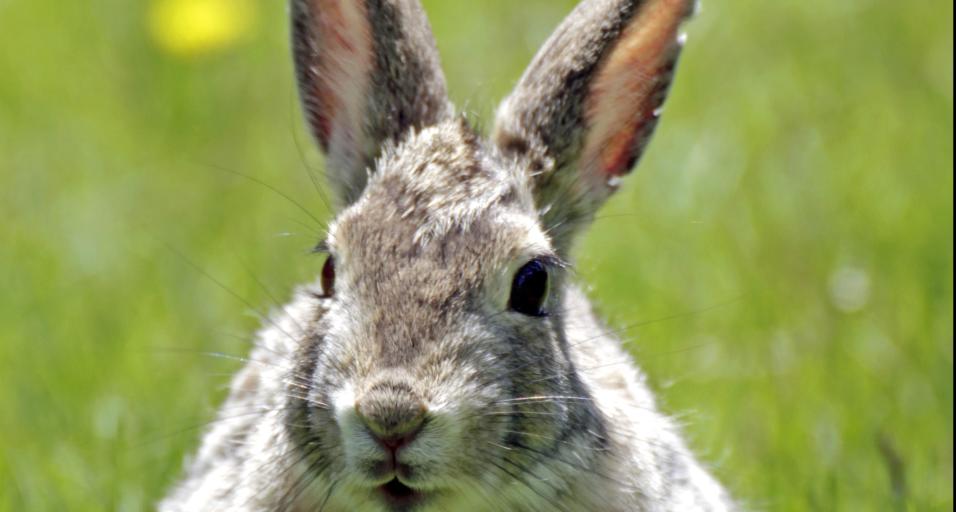
Wyomingites are being asked to keep a lookout for dead rabbits in their yards, rural property and other outdoor areas. The Wyoming Game and Fish Department is collecting wild rabbit carcasses for Rabbit Hemorrhagic Disease Virus2 testing, known as RHDV2. While not found in Wyoming yet, the disease has been identified in neighboring states. Testing rabbits is key to monitoring the disease spread.
RHDV2 is a fatal disease of rabbits and hares. An estimated 35-50% of infected wild rabbits succumb to the disease.
Samantha Allen, Game and Fish state wildlife veterinarian, said all of Wyoming’s rabbits and hares are susceptible — that includes game and nongame species like cottontail rabbits, jack rabbits and potentially, pygmy rabbits. Domestic rabbits are also at risk; however, other domestic pets and livestock are not at risk from the disease.
The first indication of RHDV2 infection in rabbits is dead animals.
“Any rabbit could become infected with the disease - so it could be a cottontail living in your yard or the one you see while hiking,” said Allen. “Please report any dead rabbits you find. Testing these carcasses is the only way to know if the disease is in Wyoming.”
The disease has been confirmed in California, Nevada, Texas, New Mexico, Arizona, Utah and Colorado.
RHDV2 does not pose a threat to humans, but rabbits carry other diseases which can — like tularemia and plague. The public is advised not to touch or pick up any dead wild rabbits. Rather, note the location and call the Game and Fish Wildlife Health Lab at (307) 745-5865 or the nearest regional office. Game and Fish personnel will evaluate the situation, and make plans to collect the rabbit.